Showing posts with label neuroscience. Show all posts

Monday, April 11, 2016

Why do we forget?

Thanks to brain training companies, it seems everyone is trying to increase his or her memory. It’s easy to argue that better memory can only positively impact your life, but in fact forgetting serves an equally important role in cognition. Specifically, forgetting is necessary for two reasons- forgetting (especially of details) allows for automatized skills and semantic encoding and forgetting is emotionally adaptive to neglect some painful or negative memories.
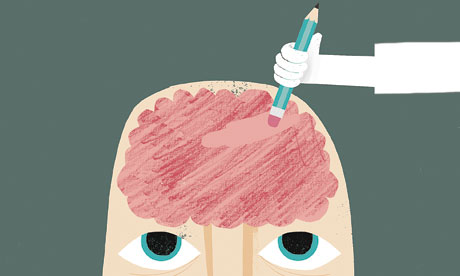
First let us examine the case of AJ, a woman with highly superior autobiographic memory. If you were to ask AJ what happened 20 years ago on April 11, she could list exactly what she wore that day, along with all of her activities. Her memory is able to retain an episodic account of nearly every day of her life. However, this ability deeply intrudes on her life. She reports, “Most have called it a gift but I call it a burden. I run my entire life through my head every day and it drives me crazy” (Parker et al., 2006, p. 35). Imagine every time you went to the grocery store, you remembered every other instance of a trip to buy milk. It would be cognitively taxing and unnecessary to sustain all these individual memories. And in fact, a study by Logan and Crump (2009) demonstrated the necessity of losing detailed memory in professional typists, who aren’t able to verbalize where keys are located or how their hands are moving. Yet these workers are still extremely proficient in their job, and when they are asked to explicitly focus on what their hands are doing, their performance suffers. These typists do not have detailed memory of every time they sat down at a keyboard, but their skill demonstrates that a composite of all those experiences meshed together have given them their proficiency. Thus, forgetting may allow for details of episodes to be removed so that abstraction and generalized skill learning can occur.
As mentioned before, forgetting not only benefits cognition, but also assists in emotional stability. Joorman and colleagues (2009), among many others, have demonstrated that depression is linked to an inability to forget negative memories. Perhaps if we were able to remember every embarrassing moment and social faux pas, we would be less likely to take social risks or even engage with others at all. Forgetting negative experiences can help us stay open to new social experiences or maintain important relationships. Going back to the case of AJ, she was diagnosed with both depression and anxiety, maybe because she couldn’t forget her negative experiences. Thus, AJ exemplifies that there is no evolutionary benefit to remembering every negative experience.
Memory is unequivocally important for many functions, but forgetting also serves a purpose in maintaining healthy functioning. Without forgetting, we might be less positive about the future and unwilling to take the big risks that advance science and other fields. We would also be unable to garner abstract information from multiple situations or sources we encounter. Like tow sides of the same coin, forgetting and remembering balance each other.


Works Cited

Joormann, J., Hertel, P. T., LeMoult, J., & Gotlib, I. H. (2009). Training forgetting of negative material in depression. Journal of abnormal psychology, 118(1), 34.

Logan, G. D., & Crump, M. J. (2009). The Left Hand Doesn't Know What the Right Hand Is Doing The Disruptive Effects of Attention to the Hands in Skilled Typewriting. Psychological Science, 20(10), 1296-1300.

Nørby, S. (2015). Why Forget? On the Adaptive Value of Memory Loss.Perspectives on Psychological Science, 10(5), 551-578.

Parker, E. S., Cahill, L., & McGaugh, J. L. (2006). A case of unusual autobiographical

            remembering. Neurocase, 12(1), 35-49.

Friday, April 17, 2015

Modelling Biological Processes using Technology

I was recently at a lecture in which the presenter referred to the "circuitry of long term memory" and I was stuck by how often we refer to anatomy as a physical system. Talking about circuits and pathways and such leads one to think in almost mechanical terms on how our organic bodies function. It's a helpful short cut to explain things in terms that are easier for a layman to follow.

It's a practice especially prevalent in neuroscience, although that is the area with which I am most familiar. In any case, I realized that this trend has been going on for quite some time and is often dependent on the current state of our technology. Take for example how the the famous Galen of the Roman Empire thought the blood system worked. "Galen incompletely perceived the function of the heart, believing it a "productor of heat", while the function of its affluents, the arteries, was that of cooling the blood as the lungs "...fanned and cooled the heart itself". Galen thought that during dilation the arteries sucked in air, while during their contraction they discharged vapours through pores in the flesh and skin."

This pumpe system as Galen saw it, was based on the ancient Roman understanding of heating and cooling similar to their intricate water ducts system.  The technology of the day formed how people thought the human body functioned. In modern lingo, cognitive scientists often speak of 'serial/parallel processing' or 'streams of information' and this all calls to mind the inner workings of a computer.

I have to wonder, in the future when we have some new fantastic technology will we compare it to another anatomical feature of ourselves? Or is it our embodied experience that allows us to come up with such technology because we are actually mirroring it after ourselves?

Friday, January 24, 2014

The Placebo Effect: A moving target

If you were complaining of an intense pain in your stomach and I offered you an injection of morphine, do you think you would feel better? What if after the injection, you started to feel better and I then told you the syringe was actually filled with saline (salt-water) solution? You felt genuinely better, even though the treatment I gave you was essentially false. This is the essential idea behind the placebo effect. You perceive that you've been treated and the strength of that assumption actually causes your brain to produce dopamine and opioids which relieve your symptoms. Granted, this works best on problems with a psychological basis (i.e., pain or depression, but not cancer tumors). And interestingly, capsule pills work better than the normal type (with injections have an even larger effect). This is because the varied expectations of efficacy for each of these treatments.

But what you might not know about the placebo effect is actually growing! That's right, according to recent reports people are more affected by the placebo effect than we have been in the past. In fact researcher Arthur Barsky recently published a study that found anti-depressant placebos were about twice as powerful in 2005 than in 1980. That's a staggering increase in an effect that many doctors have assumed to be stable.

So why might the placebo effect be growing in strength? The truth is we're not really sure. It might be that people have more faith in the efficacy of the treatments we're given. We're very much in the habit of feeling ill, going to the doctor for a prescription, and then feeling better. This routine is very engrained in our culture. There could also be other explanations, but only now are we beginning to explore the causes and its potential beneficial use in therapies. 

While this might all seem like good new for potential new therapies using the placebo effect, it's not all good news. pharmaceutical companies are required to prove their drugs are stronger than the placebo effect in at least 2 trials. But as the placebo effect gets stronger, it's harder to make medications that can actually beat it. Some companies are getting out of the psychopharmacological business altogether in oder to cut their losses. This could result in fewer new treatments coming out for psychological disorders. We don't yet know how much this will impact the future of treatment, but it's definitely something to keep an eye on in the future.

Oh and because I'm obsessed with sleep research, here's an article about how the placebo effect can even be used for increasing cognitive performance by making you believe you received better quality sleep than in actuality.

Tuesday, December 24, 2013

Post Undergraduate Plans

Yipes, this is embarrassing. I haven't posted at all this semester and I was so certain that I'd finally have the time to get back to this! I suppose I shouldn't be surprised that senior year turned out harder/busier than I would have guessed. It's my final year as an undergraduate student at the University of Texas which means all of my time is focused on graduate applications and my senior thesis.

While I'd love to go on and on about my senior thesis project (I think it's pretty sweet!), I'd like to just talk a bit about the process for applying to graduate schools. It went something like this for me:

1. Generalized stress
2. Look at the national ratings for cognitive psychology programs
3. Panic
4. List programs that seem to be in my field of interest (sleep, memory, cognition)
5. Look at faculty at those programs/find potential advisors
6. Sign up and take the GRE
7. Panic about results
8. Make list of schools/advisors to apply to
9. Order official transcripts from UT
10. Email potential advisors with my CV
11. Write personal statement
12. Send statement to a friend, rewrite, send to grad student, rewrite, send to PI, rewrite
13. Stress out that my writing is unintelligible
14. Fill out online applications for selected universities
15. Generalized panic

Obviously, there was a lot of stress/panic involved with my personal experience. It's both humbling and inspiring to apply: humbling because you're reminded of how much more you could always be doing but inspiring because you realize how much you've accomplished already.

I'm so glad to be done with the stress associated with applications. Now I just have to play the waiting game to find out where I will have the opportunity to interview at. Surprisingly, I have already heard back from Northwestern University and will be interviewing with their department in February.

Hope to let you know how it goes then and happy holidays!

Thursday, August 22, 2013

Aquatic Intelligence

So while I wait for my final year of undergraduate school to start already (seriously, I'm getting very antsy here), I haven't had much to say. I already told y'all that I'm back from New York and the only big development since my last post is that I took the GRE. It's not exactly thrilling, but at least it's out of the way.

However, I did recently see a movie that made me wonder about the future of neuroscience research in other species besides humans. The movie was called "Blackfish" and addressed the issues of captivity and resulting violent behavior by orcas. It was created as a sort of expose of the practices committed by SeaWorld and other such institutions. For a documentary dealing with some pretty heave stuff, it doesn't come across as PETA-crazed or leave you feeling uncontrollably depressed. Instead, I found it both inspired by orcas as a species and melancholy that humans believe we have any control over another species. I highly suggest checking it out when you get the chance.


But how does this relate to neuroscience? Well one the professionals interviewed by the producers of Blackfish is a neuroscientist named Lori Marino. She makes the point in the movie that whales have incredibly developed brains, particularly portions of the brain often associated with emotional cognition. It was so exciting to me to hear her talk about recent MRI scans of whale brains and the findings we're just beginning to uncover.

A short literature search when I got home from the theatre showed me that we are just barely beginning to scratch the surface on cetacean intelligence. I found some pieces on complex auditory processing, a few short articles on whale cortical structure, and (my favorite subject) differing sleep patterns of cetaceans. Still, the overall picture of our knowledge about marine mammals' intelligence is highly limited. It honestly makes me wonder if the next big breakthroughs in neuroscience and cognition will come from studying whales and dolphins.

What do you think? Should we dethrone the primate as a model of study? And what does this mean for the ethics regarding our treatment of marine life (eg. our wanton pollution of the seas)?

I would personally love to study whale/dolphin intelligence, but I probably need to finish my undergraduate career first.

PS- here is another op ed in a similar vein as this piece.

Monday, August 5, 2013

Short Conclusion

On the bus for our last night on the town!
To be honest, I've been putting off writing this post. Mostly just because I'm so sad that my New York experience is over. Here I am, sitting on my couch at home, just wishing I was still exploring that massive city and enjoying weather that isn't 102 degrees every day. But all good things must come to an end, and my summer at Albert Einstein is now over.


Of course, I have so many wonderful memories of the people I met and the things I did. You can fit a surprising amount of exploration into 2 months worth of weekends in Manhattan.
More friends!

But now that the poster session is over and my research there is complete, it's time to move on to my future challenges. I have my final year at the University of Texas to look forward to! I'll be working on my senior research thesis, joining the junior fellows honors group, and researching further into graduate schools to apply to. It's all very exciting stuff in my opinion.

Still, I will miss everyone at Einstein and I hope we find a way to meet up again!

Tuesday, July 30, 2013

Pushing and cutting science, all at the same time

I've noticed an underlying dichotomy through my research experience this summer. It's a paradoxical state that is brought up every week during our faculty lecture dinners. Every Monday, we have one of the Einstein faculty give us a short presentation on their work and sometimes their lives in science. The talks have ranged from fascinating to yawn-inducing, but one small issue remains a constant thorn in the back of my mind- there just isn't much money devoted to research anymore.

Maybe I should go into finance instead? One
problem.... I don't really like math for the sake
of math.....
If you have any experience in research, you may have heard the dreaded word 'sequestration' thrown around. The basic facts are that the US government is mandating that NIH (National Institutes of Health) cut all programs by 5%. That may not seem like a lot, but check the impacts that this will make on all research, particularly medical. All around the nation, newly minted PhDs are struggling to find positions of any sort in academia. Well-established labs are cutting back on personnel or sometimes even disbanding altogether. In an age when we have the technology to approach some of the most difficult scientific problems, we simply wont put the money into completing the necessary research. I kid you not, one of our weekly presenters nearly broke down and cried when he started to discuss the tremendous impact the sequestration and other economic changes are having on basic laboratory science.

This is all very depressing and dissuading for people like me and the others at this program, but you may be wondering how this amounts to a paradox. The paradox is that grade schools and undergraduate programs are constantly pushing for students to go into the sciences. There are countless programs driven at getting women, underrepresented minorities, and everyone else into some sort of science career. Scholarships, awards, and specialty programs are all being driven to get the next generation of scientists out there. A next generation that has almost no financial support when they complete their years of rigorous schooling/training.
Fellow SURP students out for dinner in Little Italy in the Bronx.
Why are we pushing science so hard, if there will be no career at the end of all this hard work? Scientists in training spend years learning techniques, reading difficult technical papers, and foregoing many social experiences in order to stay in and study for those requisite top grades. But at the end of this long arduous path is... nothing. Or not much, at least. Because of cut funding, programs have become highly selective and end up not taking many bright, hardworking students simply because they cannot afford it. So much hard work for a rapidly shrinking payoff. IT DRIVES ME NUTS!
I'll just wash away my depression at the current
state of affairs away with delicious independently
brewed beer! ...Just kidding, that's what alcoholics
do. I drink to celebrate!

Ok, all funding cuts to education tend to get me pretty annoyed but this one in particular is affecting my future. A future that is approaching very quickly as I will be graduating next spring. If there's no funding in science, how can we expect my graduating class to actually want to stay in their research fields? I'm still at a loss for how the next few years of my life will progress. I LOVE neuroscience research, but I'm not the top student at my university and I don't know how competitive I'll be for graduate programs.

I'd like to wrap this post up with a hopeful note saying "I'm sure to persevere" but the truth is, I don't know what awaits me.

Wednesday, July 24, 2013

Neuroscience is a small world

I know, I know. I've fallen behind. Both in terms of keeping this blog up to date and in wishing Oliver Sacks a very happy 80th birthday (it was on July 9th, but better late than never!).
Corny picture but I couldn't care less!

Let's just say that I lost track of time. Heck, maybe I was even in the phone box too long and actually was moved forward in time without realizing it! (Yes, that was a lame attempt at a Doctor Who reference. Deal with it.)

I did spend a good portion of my time a few weekends ago at an absolutely fantastic little bar called the Way Station. In case you can't tell from the image, it's a Doctor Who themed pub with the bathroom exterior designed to look like the Tardis! And yes, it actually was bigger on the inside. Plus, Matt Smith, Karen Gillian, and Steven Moffat all signed a wall there while they were in New York shooting 'Angels Take Manhattan'! Needless to say, I was thrilled to visit.

But right now, I'm even more thrilled to see where my academic career is taking me. I was recently listening to the newest Radiolab podcast which tells the story of how Oliver Sacks began his writing career while reorganizing some data in the lab. I was only mildly paying attention as most of my concentration was focused on the excel sheet in front of me, but when I heard Sacks mention Albert Einstein College of Medicine I stopped everything for a moment.
I had the good fortune to visit a primate lab
where they were recording from inside the
visual cortex. It was stunning!

Oliver Sacks worked on the same campus that I have had the privilege of being a part of. Oliver Sacks was in the neurology department and most likely worked in the same building that my lab is housed in! I know it seems like a little thing, but I just got so excited!

I remember reading The Man Who Mistook his Wife for a Hat in high school and thinking it was the most interesting compilation of neurological stories I'd ever read. It gave me a place to connect the physical systems I'd been learning about in biology and psychology with the actual ramifications of various disorders. Connecting that high school experience of 4 years ago with the work I'm doing now reminded me how far I've come in the field and how excited I am to be a part of it all.

Another fun connection in the podcast was hearing how Oliver Sacks was inspired by the writings of A.R. Luria. When Sacks was at Albert Einstein, he was doing mostly laboratory science with neural cells of earth worms. But reading Luria's humanistic recordings of his patients helped change his direction towards medical writing.
Frankly, some scientific writing makes as
much sense as this painting I saw at the
MoMA...

Now I know a lot of strict scientists are not fans of this prose-style writing and say it's too much fluff to be of any use. And I've heard people argue that his writing is just a glorified way of turning patients into a paycheck. Still, I think we need to keep in mind that Oliver Sacks has helped raise interest in neurology in general and that can only help draw more people to the field. "Pure scientists" should realize that while their work is vital, if it can't be disseminated in some form it is simply useless.

In conclusion, Happy (late) Birthday Oliver Sacks! Haters gonna hate, but I want to say I've loved reading your stories.  And as you were inspired by Luria, I continue to be inspired by Radiolab. (Seriously guys, if you ever need a correspondent in Texas just let me know!) And to all my readers, I'd love to hear about what inspires you! Feel free to comment below!

PS- My laptop recently decided to have a meltdown. It seems that my hard drive is kaput and I only have 1.5 weeks left in New York before I return to the blazing hot state of Texas. So, this may be my last post for a bit.

Oh yeah, and it hasn't all been hard work. I did find the time last weekend to see
Justin Timberlake and Jay Z perform at Yankees Stadium!!!!!!!

Thursday, July 11, 2013

Summer: A time for self-reflection

A shot of downtown Manhattan from the World Trade Center (40th floor).
So it's been almost 2 weeks since my last post. Things have been chugging along quite nicely in the lab and I feel like my research experience has helped me to re-evaluate my current career trajectory. As my mom can attest, I spent about the first 2 weeks here freaking out about what exactly I want to do with my life. I've always made the assumption that I would go on to a PhD program, work as a postdoc, and eventually become a research professor. But truth is, life is never so easily mapped out. I've had multiple occasions here at Einstein where I realized that there are a plethora of places I could end up and still be happy.


Our visit to the WTC was thanks to a panel the SURP program took us to, regarding MD/PhD programs.

The trick is knowing what I love to do. I love to learn new things (hence why research excites me so much). I love teaching things I've picked up to others (thus, my preference for gaining some kind of position as an instructor). I love neuroscience (and I plan on never leaving the field!).
During my time in NYC, I've certainly been trying lots of
new, delicious foods! Here is a picture from Max Brenners
(a chocolate restaurant) where I had a S'mores Sunday.
But these three passions can all be met by a variety of jobs and opportunities. That's what this summer is teaching me to see- that I have so many possibilities ahead of me and I should evaluate all of them before making any assumptions about the right path for me.

All this being said, I still am DEFINITELY getting a PhD. I don't think I could be happy without becoming an expert in my field and having all the experiences associated with doing your own research experiment. So, I will continue to peruse graduate school applications during my lunch break and enjoy every opportunity here in the 'Empire State.'
The Manhattan skyline from rooftop...
...before the grand fireworks from the Hudson River.

And let's not forget, I've gotten to see some old friends from ATX!


PS- My old roomie, Kelsey, met the folks from Radiolab to which I must admit I am eternally jealous. If they ever need a correspondent in Texas, I'll gladly work for them for free! Just saying....
And to make my 4th of July weekend complete, a
wonderful trip out to Bear Mountain for lovely hiking!

Sunday, June 9, 2013

First Bite of the Big Apple

As I said in my last post, I'm finally here in New York. I've never even been to the east coast before (besides a short weekend in Boston for Taekwondo), so it's been a completely new experience for me. And I'm not going to lie, my first day in 'the city' had me feeling gape-mouthed like a total tourist. Thank god I had my fellow SURP-ers to explore with this weekend and get a feel for the city.
We went into FAO Schwartz toy store- overwhelming! 
As soon as I saw the Rockefeller Plaza, the theme
song to 30 Rock popped into my head and
wouldn't leave! 
More Rockefeller..
This was at Times Square... I think. I was
engrossed in a conversation about research
at this point.


This was at Union Square and I don't know
what it is but I thought it looked cool.

I'm dying to try out the CitiBike project they
just started where you can rent a bike for a day!

This was taken from the High-line. It's
essentially an old train line that has been
converted into a garden walk that goes
over the city streets.

More High-line. It was so beautiful and
peaceful! I definitely plan to return!
Just to give you a taste, we walked from the lower part of Central Park to Union Square to the High-line and some beyond that. To tell the truth, I'm not exactly completely sure where-all we went. It was an over-whelming first day, followed by a second Sunday adventure across the Brooklyn Bridge. I haven't walked this much since back-packing when I was back in high school! I know I should have been expecting the city to be this huge, but it really hasn't hit me until finally walking the streets. I can't believe I get to spend the whole summer doing research and exploring Manhattan.

From the pier on Fulton Street.
Longhorn in Manhattan!
Freedom Tower near Ground Zero
The Brooklyn Bridge! 
I'm finally getting the hang of panoramic shots on my phone.


Oh yeah, research. That's the reason I'm here- right? Well, so far I haven't really gotten started with my actual research project. I've been assigned to Dr. Elyse Sussman's lab for the next eight weeks to continue my experience in EEG. In fact, it turned out to be the perfect match! I've spent the majority of the past year running participants on EEg, but now I get to try the other side of the coin and do actual data analyses. Based on the information I've been given so far, I will be processing an EEG data set and look for specific ERP components. It will be interesting to do work related to the auditory system instead of sleep (of which I am more familiar). But as things stand now, I've only been reading up on the subject and hope to start the real work this week!
Taken from Brooklyn.

Thursday, June 6, 2013

Chronic sleep restriction affects behavioral and ERP correlates of psychomotor vigilance - AKA My First Poster

I suppose this entry is technically late. Tuesday represented my big debut into the fascinating world of sleep research with my first-ever poster session. Sure, I was able to assist in a presentation in January at an aging conference but this was the first work that I've ever presented solo. It was both terrifying and exhilarating. I probably spent the first 15 minutes alternating between terror that someone would ask a question and worry that no one would ask me about my research. But, unsurprisingly, the session went well with polite, friendly people asking a few questions and some even complementing me on my research. And now that I've run through my little spiel in an academic setting, I feel comfortable in sharing it here on the internet. Keep in mind, this isn't an exact replica of my academic-version of the presentation because I know how daunting such technical jargon can be.
The Constellation in Baltimore's Inner Harbpr

My lab was interested in how chronic sleep restriction (a lessening, but not total deprivation of sleep) affects sustained attention, both as a behavioral measure and through recordings of EEG*. Past research has shown that the PVT (psychomotor vigilance task) is an accurate measure of sustained attention. For an abbreviated, modified version of the task, click here. But essentially, participants were asked to watch the screen and hit the spacebar whenever they saw a stopwatch appear on the screen.

Our experimental design began with recruiting 24 undergraduate students with no neurological or psychological problems (including sleep disorders). We had them come into the lab where we recorded resting state EEG (which is sort of a baseline cortical activity) and recorded EEG while they performed the PVT. We then gave them actigraphs (wristwatches that record movement and thereby objective measures of sleep-wake cycles) and asked them to fill out a sleep log entry each day. There were approximately 6 weeks between each of the 3 EEG sessions so we got a span of the full semester.

Based on this data, we found that average daily sleep decreased between session 1 and sessions 2 & 3 (from around 7hrs to 6.5hrs) and this negatively predicted reaction times on the PVT. In other words, sleep went down and time it took to react went up.
My poster

On the EEG side, we found the amplitude of the P3 component significantly decreased from session 1 to sessions 2 & 3. P3 is a change in voltage which has been linked to decision-making in past research. We also found that alpha reactivity amplitude decreased between session 1 and sessions 2 & 3. This component is a little difficult to explain in layman's terms, but essentially a lowered amplitude in alpha reactivity has been linked to dementia, traumatic brain injury, and aging.

The changes in P3 amplitude and alpha reactivity each negatively predicted reaction times both across and within-subjects. What makes this incredible to me is that we saw such clear effects from only avery small change in average daily sleep. We plan to look from here at more specific measures of sleep such as circadian rhythms and sleep latency.

So, that's more or less what I got to present at the conference. It was pretty incredible to talk to so many experts in the field and I look forward to attending next year (hopefully!). For now, I've just settled into my room at Albert Einstein College of Medicine and have started to learn a little about what I'll be doing this summer. More to come on the New York experience next time!

*EEG or electroencephalography is a technique used to record electric potentials created by brain activity and recorded through the scalp. EEG is known for its high temporal (time-based) resolution, but low spatial (location-based) resolution. This makes it good for looking at timing in activation in the brain, but we cannot always locate the origin of the activation.
After a successful, if exhausting, first poster session.

Saturday, September 1, 2012

All Science isn't Good Science

*Note: First of all, I want to apologize profusely for having been away so long for my blog.  I can tell you right now, it wasn't from sheer laziness as would be expected.  In fact my summer was spent working nearly every single day- including through the weekends.  I was hired on by my lab to continue assisting with the data analysis and on days I wasn't there, I worked in Central Market as a cashier.  But now the school year has begun and while I certainly have less free time, I will also have a lot more subject matter to write on.

Maybe this is merely my interpretation, but I believe the first two years of college for a science student are about teaching you "facts" while the second half is devoted to showing how we can get bad "facts" from a poorly designed study.  As a good scientist, one must always examine how the conclusion was reached and whether the experiment is actually sound.  I want to give 2 examples of studies which should not be used in modern science- one because the technology is far out-dated, and the other because of a poor subject selection and subsequent experimental design.

The Tilting Table
The first story I want to tell revolves around the famous psychologist- William James.  He has been quoted for his many insights into memory and cognition though very poetic language.  But did you know he also tried to create the first MRI in the 1890s?

Imagine a man lying on a perfectly flat table which has been balanced beneath him.  James then asked the man to think either about some emotional aspect, or to do a series of logical puzzles.  If this went on long enough, the table would tilt towards the head, as if it had become more heavy. This was the first attempt to understand blood flow as a mechanism for measuring what is being activated.

Keep in mind, this is beyond rudimentary.  It was an extremely clever idea at the time, but has since been outdated with PET scans and fMRIs.  The reason I include it under the heading "bad science" isn't because I'm not impressed with William James.  On the contrary, I find him a fascinating individual.  But I wanted to demonstrate that technology continually advances.  To use outdated technology in a modern experiment can alter the results in a way that is unknown to the experimenter.  The newest technology isn't always the best but we can't use outdated methods if we expect our work to be taken seriously.

The Talairach Brain
Within the past week, I have heard the Talairach brain mentioned at least 3 times and never with any reverence.  And when I learned more about it, I was astounded that anyone would keep it in use as an atlas for modern studies.  Here is, in my opinion, an example of science at its worst.

Talairach is the name of the researcher leading in the creation of this atlas.  An atlas, in neuroscience terms, is a model brain by which you can standardize the areas of activation found using fMRI studies.  It's a template that you lay your own images over to map where you say activation.
Here is an example of a structural scan using an MRI.  I
believe the Talairach model has been overlaid on the original.

But the Talairach model is a terrible choice.  Talairach used only one subject for his template whereas most modern research uses multiple brains which are averaged together to create a model more standard to the population.  The second problem with Talairach was that he used the brain of an alcoholic woman- which by no means has the same structure and function as a normal, healthy brain.  And as if that weren't bad enough, Talairach didn't even scan her entire brain.  He actually just scanned one hemisphere and then flipped it over to create a mirror image.  Normal brains have slightly different function and structure across the hemispheres.  This is a fact that Talairach completely disregarded in favor of ease.

The sad part is there are still some studies today which use the Talairach brain atlas.  Many other atlases have been created since then but the old design persists.  This is why it is important to understand what you are reading in scientific literature and be able to critically analyze it.  Not every published paper is without its faults.  This is an important lesson that I believe the lay public is not enough aware of.

Tuesday, June 12, 2012

Humans are still Animals

Ok, so maybe we're dignified animals with greater reasoning capacity, memory, and general cognition.  But I think there's way too much of a tendency to put humans in a different category from animals like we're a whole separate branch on the evolutionary tree.  This tends to be more of a social problem based on religious beliefs, among other things.  Just look at the famous philosopher Rene Descartes.  He believed that animals were biological clockwork creatures with no thought processes or souls.
Do you believe puppies have souls?

But I recently read a fascinating article sent to me by my roommate, Emily Mixon.  Seriously, read it cause you'll learn some pretty amazing facts.  Like, did you know bighorn sheep in Canada will grind their teeth to the gums rubbing off hallucinogenic lichen from rocks?  It's some pretty crazy stuff.

But what really struck me was the bit about cutters.  For me, I remember a lot of people being cutters in middle school.  For those of you who don't know the lingo, it's a person who cut themselves not because they're suicidal but because it somehow helps them deal with stress and relax.   At the time, I thought it was completely crazy and probably just people looking for attention.  But there's actually evidence for this type of behavior in the rest of the animal kingdom.

In fact, some breeds of dogs are prone to similar behavior.  In the article, it describes this as grooming gone wrong because the animals will either lick or bite themselves compulsively until they bleed.  I wont go into the details because the article covers them pretty well but there's significant evidence that animals have had problems with such compulsive activities- from mammals to birds.  And thanks to my neuroscience knowledge, I understand an additional layer of this behavior.  Because what person would purposefully pull their hair out or cut themselves?
A bizarre but explainable phenomena.

Well grooming activities and their habitual nature lead to large doses of serotonin being released in the individual's brain.  So over grooming could almost be like a form of self-medication.  The repetition of the activity keeps serotonin (which is highly involved in regulating mood and depression) flowing.  Also, the end result of self-injury causes the body to release endorphins.  Just like a runner's high, this self-synthesized drug dulls pain and gives you that "spacey" feeling of zoning out.  So maybe animals do have some of the same problems we tend to see as uniquely human.

I know there are still plenty of differences between animals and humans.  Our brains are developed to differing degrees.  The body plans from species to species can have huge variance so we can assume one trait or idea will explain the entire animal kingdom.  But we also can't close ourselves off.  We all have a common denominator that can''t be ignored.  Why else would scientists use animal research?  Just a little food for thought.