Showing posts with label cognitive neuroscience. Show all posts

Tuesday, June 28, 2016

Quick Update: Conclusion of my Research Abroad

Iliana's first night here and we stumbled onto a wine festival!
So I blinked, and now all of the sudden I'm on my last week in Lübeck... Where did the time go? Well, most of it has been spent double- and triple-checking all the equipment is working for our study. Because we are doing simultaneous EEG and fMRI, there are a lot of moving parts that could derail the study. Thankfully, I think we're finally worked out the last of the issues! This week, my last week in Germany, marks the beginning of data collection. Our first participant is this Wednesday, with hopefully more to be scheduled soon after. And although I'm leaving, my lab mate Iliana is taking over for the next 3 weeks.
So while I won't be here for the majority of the data collection, I'll still be helping from afar to make sure this project continues smoothly. Anyways, for family & friends who want to know what my last few weeks have been like, I've added some pictures below of my recent adventures!
While Daniel, my boyfriend, visited we put him to work as a pilot subject!
A visit to the CHOCOLATE MUSEUM in Hamburg = heaven
Urban beehives at the world-famous restaurant "Noma" in Copenhagen

Meals are reservation only and run about $400... Obviously we didn't go

Photo courtesy of Daniel- Copenhagen wanderings

Being ridiculous at Tivoli (amusement park in Copenhagen)

Copenhagen's iconic Little Mermaid statue in honor of Hans Christian Anderson

Daniel and Ariel ;)

A bamboo bicycle at the Danish Museum of Design
I would have had more pictures from recent adventures in Copenhagen and Hamburg (where I got to give a small guest lecture!), but my phone's camera has been non-operational for the last few weeks. So I'm looking forward to returning home not only to resume data collection for my master's project, but also so I can get this phone problem resolved! Chicago, Il- Here I come!

Monday, June 6, 2016

Pesky Programming, Massive Magnets, & Exciting Exploration

It's my second week in Lübeck, and I feel like I'm finally starting to settle in properly. Although moving slow, the project I'm working on is really progressing. My first week was almost all about making experiment design decisions while this past week has been all about implementing them. Well, that and testing out the equipment. It took me longer to figure out some programming quirks for an aspect of our task to run properly on the scanner computer.
The entrance to the MRI control room

Also, I'm sad to report that it seems I won't get to see what my brain looks like after all. My copper IUD is only rated as "MR safe" for up to 1.5 Tesla magnets (that's a measure of strength of the magnetic field) and we use a 3 Tesla magnet here. So although there's basically no evidence that I could be harmed by the electromagnetic field, once again I'm stuck in the control room and not able to get pretty images of my brain.

Anyways, beyond my personal disappointment, everything has been going really well.  I think with our current time line we shouldn't have too much trouble collecting enough participants in the time allotted. It helps that within the next week, Iliana (a fellow NU grad student) will arrive in Hamburg so we can really get running. In the mean time, it's pre-piloting, correcting, and more piloting for me! Oh! And I'm giving a short talk/presentation at an MRI colloquia as the official proposal to start running subjects. I'm more than a little anxious, but I think that it should go fine.

While my weekdays have been completely consumed with research, my weekends are reserved for exploration and fun! Last weekend, I spent Saturday exploring the city of Lübeck and getting my bearings. I also went to a fascinating museum about the Hanseatic League.
The famous Holstentor- or Holsten Gate- of Lübeck

Downtown Lübeck
On Sunday, I took a 30km (10 mile) ride on my trusty bicycle to the beach town of Travemünde. The ride itself was mostly through woods or around farms so it was a beautiful way to see the countryside. It was misty when I got to the beach, but I enjoyed wandering around and having lunch before cycling back home.
Travemunde
Travemunde


Sign reads "We live here"
This past weekend, I went a bit further afield. On Saturday, I journeyed into Hamburg- Germany's second largest city after Berlin. I can't say I got to see all of it, or even a good portion. I mainly spent time in the Planten un Blomen and Miniatur Wunderland.  The first is a huge park in the city that is absolutely lovely and peaceful, the second is my dream come true. A museum totally composed of miniature worlds and running trains. I can't even begin to describe how delightful it was! There were models of Switzerland, Hamburg, and the US, plus all kinds of fictional places.  I spent hours there and didn't even see all of the details. Did I mention the model builders also clearly have a sense of humor?
The creators have weird senses of humor- peeping monks watching a scantily clad woman try to fix her car 
I love the cyclist race with the kids trailing behind 

Just to give you an idea of the size of the displays- Swiss mountains
Anyways, yesterday I went to Schwerin for a quieter adventure than the big city. It's a town south east of Lübeck and famous for it's castle surrounded by lakes. It honestly looks like something out of a fairytale. Once again, I was drawn to some quiet park space to relax after seeing the castle. So overall, I must say my weekend adventures have been really lovely!

Schwerin, Germany

The fairytale castle- Schwerin
My best childhood friend, Courtney
And as a last note, last week I had the pleasure of my childhood best friend once again meeting me in Europe! Courtney stopped by for a few days in Lübeck before continuing her travels before her big graduation ceremony at Cambridge. So congrats to Courtney for finishing her post-bacc degree! I'm so happy for you!
Cheers to you Courtney!


Monday, April 11, 2016

Why do we forget?

Thanks to brain training companies, it seems everyone is trying to increase his or her memory. It’s easy to argue that better memory can only positively impact your life, but in fact forgetting serves an equally important role in cognition. Specifically, forgetting is necessary for two reasons- forgetting (especially of details) allows for automatized skills and semantic encoding and forgetting is emotionally adaptive to neglect some painful or negative memories.
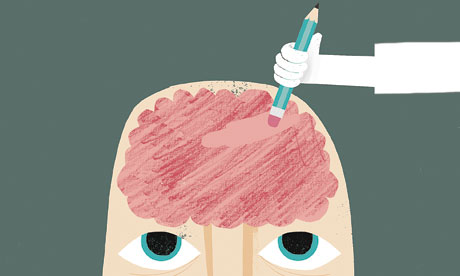
First let us examine the case of AJ, a woman with highly superior autobiographic memory. If you were to ask AJ what happened 20 years ago on April 11, she could list exactly what she wore that day, along with all of her activities. Her memory is able to retain an episodic account of nearly every day of her life. However, this ability deeply intrudes on her life. She reports, “Most have called it a gift but I call it a burden. I run my entire life through my head every day and it drives me crazy” (Parker et al., 2006, p. 35). Imagine every time you went to the grocery store, you remembered every other instance of a trip to buy milk. It would be cognitively taxing and unnecessary to sustain all these individual memories. And in fact, a study by Logan and Crump (2009) demonstrated the necessity of losing detailed memory in professional typists, who aren’t able to verbalize where keys are located or how their hands are moving. Yet these workers are still extremely proficient in their job, and when they are asked to explicitly focus on what their hands are doing, their performance suffers. These typists do not have detailed memory of every time they sat down at a keyboard, but their skill demonstrates that a composite of all those experiences meshed together have given them their proficiency. Thus, forgetting may allow for details of episodes to be removed so that abstraction and generalized skill learning can occur.
As mentioned before, forgetting not only benefits cognition, but also assists in emotional stability. Joorman and colleagues (2009), among many others, have demonstrated that depression is linked to an inability to forget negative memories. Perhaps if we were able to remember every embarrassing moment and social faux pas, we would be less likely to take social risks or even engage with others at all. Forgetting negative experiences can help us stay open to new social experiences or maintain important relationships. Going back to the case of AJ, she was diagnosed with both depression and anxiety, maybe because she couldn’t forget her negative experiences. Thus, AJ exemplifies that there is no evolutionary benefit to remembering every negative experience.
Memory is unequivocally important for many functions, but forgetting also serves a purpose in maintaining healthy functioning. Without forgetting, we might be less positive about the future and unwilling to take the big risks that advance science and other fields. We would also be unable to garner abstract information from multiple situations or sources we encounter. Like tow sides of the same coin, forgetting and remembering balance each other.


Works Cited

Joormann, J., Hertel, P. T., LeMoult, J., & Gotlib, I. H. (2009). Training forgetting of negative material in depression. Journal of abnormal psychology118(1), 34.

Logan, G. D., & Crump, M. J. (2009). The Left Hand Doesn't Know What the Right Hand Is Doing The Disruptive Effects of Attention to the Hands in Skilled Typewriting. Psychological Science20(10), 1296-1300.

Nørby, S. (2015). Why Forget? On the Adaptive Value of Memory Loss.Perspectives on Psychological Science10(5), 551-578.

Parker, E. S., Cahill, L., & McGaugh, J. L. (2006). A case of unusual autobiographical

            remembering. Neurocase12(1), 35-49.

Tuesday, August 25, 2015

How to talk science without sounding like a pompous jerk

The class I am taking this summer is rather unique, though it certainly shouldn't be. I'm trying to develop lifelong skills necessary (in my opinion) for success in academia, but they are skills woefuly ignored. Specifically, I'm trying to learn to be a better communicator with those outside my field of research.
Video interviewing at Medill

As students in classes taught by famous, yet boring professors can attest- being a great researcher does not mean you are a great communicator. It doesn't even mean you are a good one.  Northwestern University offers a wonderful program to help turn this pattern around, called 'Ready, Set, Go!' The aim of this program is to help scientists and researchers across all disciplines to disseminate their work to the broader world. It's a surprisingly daunting task.

For one thing, content really does matter. On my first day with the other students, I realized that my research is at somewhat of an advantage. I study human systems (memory and sleep) so they are easier to understand intuitively. My classmates studying nanoparticles or non-newtonian fluids have a lot more jargon to deal with the complex systems they study. Learning to cut back the three-plus syllable words is only the first step. We have also learned how to use analogies, craft stories, and pull approachable aspects of our research to the forefront. All of these pieces must fit together to create a coherent story.

Beyond storytelling, there are also other aspects to consider. For instance, this week we spent our class time in the Medill television studio to record interviews on our research. It quickly became apparent that outside of knowing the research, we had to know how to turn a question towards a topic we want to discuss and and leave hooks for other points you want to make, so the interviewer can pick them up.

And of course, we must remember the physical aspects of a tv interview. To look like a credible source, you need to dress the part. Wearing bold colors (but no patterns), sitting at the edge of the chair to avoid slumping, and wearing a suit jacket are all tricks that you only realize after watching yourself on the screen. Although I still feel there are many things I'd like to tweak on my interview, I think my last take was a solid of example of how to put some of the skills I've learned into action.


Of course, the class isn't quite over yet. I will be making a final video where I will explain my research in full, and hopefully get to play with some neat video editing tools. I will certainly be posting that video, along with a recap, when the summer ends.

But for now, I'm actually going on holiday to Europe. I'll try to post updates of my trip here, though don't expect too much science- I'll mostly be enjoying local culture and food!

Friday, April 17, 2015

Modelling Biological Processes using Technology

I was recently at a lecture in which the presenter referred to the "circuitry of long term memory" and I was stuck by how often we refer to anatomy as a physical system. Talking about circuits and pathways and such leads one to think in almost mechanical terms on how our organic bodies function. It's a helpful short cut to explain things in terms that are easier for a layman to follow.

It's a practice especially prevalent in neuroscience, although that is the area with which I am most familiar. In any case, I realized that this trend has been going on for quite some time and is often dependent on the current state of our technology. Take for example how the the famous Galen of the Roman Empire thought the blood system worked. "Galen incompletely perceived the function of the heart, believing it a "productor of heat", while the function of its affluents, the arteries, was that of cooling the blood as the lungs "...fanned and cooled the heart itself". Galen thought that during dilation the arteries sucked in air, while during their contraction they discharged vapours through pores in the flesh and skin."

This pumpe system as Galen saw it, was based on the ancient Roman understanding of heating and cooling similar to their intricate water ducts system.  The technology of the day formed how people thought the human body functioned. In modern lingo, cognitive scientists often speak of 'serial/parallel processing' or 'streams of information' and this all calls to mind the inner workings of a computer.

I have to wonder, in the future when we have some new fantastic technology will we compare it to another anatomical feature of ourselves? Or is it our embodied experience that allows us to come up with such technology because we are actually mirroring it after ourselves?

Sunday, November 9, 2014

Brave New World (of sleep research!)

If you've ever read Brave New World (and I sincerely hope that you have), then you probably remember the strange hypnopaedic training used to keep people thinking as the World State wants them to. Basically, the State trains citizens from childhood by using softly spoken mantras played in their sleep.  These constantly repeated ideas are designed to keep them from rising above their prescribed station in life by cuing them to how they should think. When I first heard of this idea, I thought it interesting but outlandish. I'm not so sure about that anymore.

You see, the Cognitive Neuroscience Lab at Northwestern University has recently delved into a research vein similar to Huxley's idea. In a very easy-to-understand paper,  members of my lab tested whether sounds played at night can actually help with memory the next day.

The paradigm went like this- participants learned where 50 objects were located on the screen and each object was paired with a matching unique sound. So they would learn the tea kettle is in the upper right corner and that a kettle whistle is associated with that picture. Next, participants took a nap and during the deep sleep stage, half of the sounds they heard were replayed to them (without waking them up). When they woke up, they were tested on how well they could remember where the objects belonged. Results showed that participants remembered more of the objects that were cued while they were asleep, and were better at closely matching where those images went on the screen. Basically, it seems like playing the sounds reactivated the memory traces during sleep and helped consolidate them to make a stronger memory!

And this research doesn't just extend to visuospatial learning. Another member of my lab showed that participants can better learn to play a keyboard to produce a melody that's been cued during sleep rather than one that hasn't. So it appears this memory reactivation is multimodal, even when we sleep.

I cannot tell you how fascinating I find this research. Currently, I'm working on a project regarding implicit memory but I'm dying to get my toes wet in some sleep-memory research. I just haven't found the right research question yet.

Let me know if these projects bring any questions/ponderings to mind!

Thursday, October 2, 2014

Creative on Demand

I feel like I have some idea of how many people in the creative field must experience their work. There's something very mentally straining in trying to be creative on demand. As a first year graduate student, I am supposed to jump right into research and get my feet wet. In other words, I am expected to  have a first year project. Generally, this isn't too much of a problem as advisors constantly have pet projects that they need someone to work on.

However, I was blessed with a very flexible advisor who is happy to let me approach problems that I find personally engaging. That means when I first met with him and asked about a first year project, he lobbed it back into my court and asked what I wanted to do. Thus, I've been asked to be creative on demand.

The thing is, you can't really be creative if you're stressed out. I'm someone who loves to have my entire schedule all planned out and obvious. But you can't plan how to come up with something as big as "what do I want to research?" So it has been a struggle.

But I think if I take some of the pressure off, I might be able to harness that intuitive thinking and come up with a cool first year project.

Wednesday, September 24, 2014

Short Update

I know I'm in the habit of having long breaks between posts and I'm trying to break that habit. So while this is a short post, I just wanted to make sure I'm keeping friends and family abreast of my life.

My first day outfit was an EEG dress and neuron jewelry
Speaking of which, I can now officially claim to be a graduate student! Yesterday was my first day at Northwestern University as a first year student. It still really hasn't hit me that I'm actually on my way to earning a PhD within the next 5 years. Sure that's quite a long time, but I couldn't be more thrilled to be on this journey.

Only a day into school and she's anxious to be an over-worked grad student? Yeah, I'm weird that way. I also prefer more structure to my schedule so I'm hoping to settle into a more full routine while still keeping some "me time." That's not to say I don't experience any anxiety. I know I've only just begun, but I'm chomping at the bit to have something to work on. I'm a bit of a work-a-holic and not having a current project makes me feel too lazy for comfort. I'm sure you're shaking your head.

I will do my best to post more often and will hopefully have some interesting fodder in the form of lectures and articles I will soon be devouring.

Monday, September 1, 2014

OCD is NOT what you think

Ok, I'll try to keep this short because this week is all about moving in. Yes, I've made the big move from Texas to Illinois for grad school in a mere 22 days! But as I start to organize my belongings, I'm reminded of a semantic error I hear all the time. Being neat does not make you OCD. Organizing your desk a specific way does not mean you have obsessive compulsive disorder.

OCD is defined as people who "feel the need to check things repeatedly, or have certain thoughts or perform routines and rituals over and over. The thoughts and rituals associated with OCD cause distress and get in the way of daily life." The NIMH do a pretty good job of breaking it down. Basically you can't help but do repeated actions (aka, compulsions) because of obsessive thoughts. These are people who wash theirs hands so much they become raw and painful, but they're still experiencing obsessive thoughts about the germs on their hands. This is a serious mental disorder that is often trivialized.
*crying* Why aren't my bananas stacked?!

I hear friends all the time say, "I so have OCD. This morning I spent 2 hours reorganizing my closet!" NO. JUST NO. You do not have OCD. You have OCPD. This is a personality disorder (which can be a bit difficult to clinical-ize as it is). The best way to describe OCPD is "characterized by a preoccupation with orderliness, perfectionism, and mental and interpersonal control, at the expense of flexibility, openness, and efficiency." For example, when I was a tiny tot, my mom used to slice up a banana for me as a snack. I would carefully create two towers of stacked banana slices and then eat an equal number of slices from each stack so that they would stay even. Being a 'banana stacker', as my parents used to call me, would be a mild form of OCPD, not OCD. When you avoid doing school work by cleaning out all the old papers you don't need on your laptop, that's mild/symptomatic of OCPD.

So yes, I've spent an inordinate amount of time organizing and reorganizing the kitchen in my new apartment. It verges on OCPD, but not OCD. Next time you have a moment of uncontrollable need to clean/organize/neaten/align something, remember that you're experiencing OCPD.

Wednesday, June 4, 2014

A short note on 'neuroscience' in movies

Ok, I just had to get this off my chest.

I have seen WAY too many movies who want to use psychology/neuroscience in some science-y fiction way. And they usually go about doing so by talking about how we only use 20% of our brains…. But what if we could use all 100%?

This annoys me because it's totally false. Or at least it's promoting a false idea. There are some people who have 100% of their brain activated at the same time: it's called epilepsy! You do not want your whole brain firing at once because it screws up the circuits and causes all sorts of damage.

Next time you watch a commercial for Limitless or Lucy, please realize that these films to not reflect reality- even in the 'science' they attempt to display.

Ok, rant over.

Friday, April 4, 2014

PhD- Here I come!

Just the lovely gals I traveled the SW with.
To be honest, I've had several ideas of new posts I should write. I still want to spend some time discussing my senior thesis! The reason none of these ideas have come to fruition is because I have been constantly traveling for the entirety of my spring semester. I had three graduate school weekend visits with Northwestern, WashU in St. Louis, and University of Arizona. I also took a week-long cross country adventure over spring break with some of the best people I know. All this, plus my constant focus on my thesis, hasn't left me with much time or creative juices.

That being said, I absolutely knew I needed to post that I have finally made my grad school decision. Drum roll please! *brrrrrrrrrrrrrrrrrrrrr*

This fall I will be joining Ken Paller's lab at Northwestern University! I cannot tell you how tough a decision it was with such great programs to choose from, but after lots of time spent on a spreadsheet and obeying my gut feeling I knew it was the right place for me to be. I'll be continuing my passion for sleep research and perhaps exploring some new paradigms I've never worked with before. The Paller lab also works with EEG and fMRI which means I can continue to develop my experience and comprehension of imaging technologies.
Evanston, IL here I come!

Sure, it's going to be an interesting transition from Texas heat to Chicago winters but I know I'm ready for a change of pace. I'm looking forward to the grand 6-year adventure towards my PhD and officially becoming 'Dr. Witkowski.' Just watch, I'm going to become the Neil DeGrasse Tyson of cognitive neuroscience!