I can't believe this week marks the beginning of my second year in graduate school. How did last year fly by so quickly? Or my summer Europe adventure for that matter!
I returned to Chicago last friday, and this monday was the beginning of my fall courses. I certainly didn't give myself much time to get back into the swing of research. I still need to deal with immediate concerns like starting data collection on my master's thesis and figuring out when I need to submit abstracts for conferences. Oh, and there are also classes to contend with. It's a bit overwhelming to think about how much I want to accomplish this year, but I also feel ready to tackle my projects after my 3 week vacation.
As for my grand Eurotrip 2015, here's a run-down of where I went and what I did:
Gdansk(aka Danzig), Poland:
 |
| The main street |
Best Experience: Before my trip, I read a historical fiction piece about Poland. One of my favorite historical events mentioned was the Battle of Grunwald (also called the Battle of Tannenburg) where the combined Lithuanian and Polish forces defeated the Teutonic Knights. Well while in Gdansk, I made a side trip to Malbork to see the world's largest gothic castle- the original seat of the Teutonic knights. The red brick walls and towers just seemed to stretch on forever. It was incredible beautiful and epic!
 |
| Malbork Castle, aka Marienberg |
 Worst Experience:
 I was an idiot and only gave myself 1.5 days to experience the Baltic Sea, the home of Solidarity (first union allowed by USSR), and smaller nearby towns like Sopot. Now I know that I have to go back!
 Unexpected Architecture:
 I had no idea that Gdansk would feel so Italian, but the city certainly had that vibe thanks to the Flemish and Italian architects who designed the buildings along the main street. The Polish/Renaissance hybrid was beautiful!
Berlin, Germany:
 Best Experience:
 I took an 'alternative' walking tour where I learned about the grunge/squatter history of the city, and how the young bohemian lifestyle is still going strong. Basically, I got to meet cool people, drink 1 euro beers, and see incredible graffitti! It helped me understand Berlin after the cold war.
Worst Experience: While running (yes, literally) from the Reichstag building to where my walking tour would start, a wasp stung me on the neck! I got some ice to keep the swelling down, but what really helped was the 'train beer' as we called it. (You can buy beers along the train platforms and just openly drink in public as you go about your business).
Best Sightseeing: In my mind, there are 2 main sights that you really shouldn't miss when going to Berlin. The first is the Reichstag building, which is where Germany holds Parliament. You can go up in this beautiful glass dome and listen to an audioguide that describes other famous buildings you see as you ascend the spiral walkway. The other must-see is the Monument to the Murdered Jews. It's a memorial that just has to be experienced. There's no other way to put it.
 |
| Looking into the dome from the walkway |
 |
| I've never experienced a monument like this |
 |
| Monument of the Murdered Jews |
Munich, Germany:
 |
| Oktoberfest were for sale EVERYWHERE in Munich |
Best Experience: Beer. Duh. Granted, I visited before Oktoberfest so maybe I didn't get the full Munich experience but I'm quite pleased with how this leg of my journey went. I spent at least one meal a day in a BrauHaus, sitting at a long wooden table, meeting locals who are happy to chat you up and share a pint with you. The community was just fantastic.
 |
| Lunch at Hofbrauhaus |
 Worst Experience:
 I will say, Munich is an older crowd. There were many times where it felt like when my dad and I go out for beers with his friends. I was generally the odd-man out simply by being young and female. However, everyone was just so warm and lovely that I can't really complain.
Most Unique Museum: I probably should have realized this, but BMW stands for Bayern MotorWerke so of course the massive BMW plant is in the center of Munich. (Bayern is German for Bavaria, the region Munich is located.) Attached to the plant is a beautifully designed showroom/souvenir stop and a museum about the history of the company. I wasn't really sure what to expect, but the architecture of the museum was truly unique and I enjoyed seeing all the old cars. Certainly worth a visit if you need to break up all the beer drinking you're doing.
 Prague, Czech Republic:
 |
| Gotta love beer tastings in Czech Republic, home of Pilzen |
Best Experience: Honestly, Prague was exciting for me because I finally got to meet up with my best childhood friend, Courtney (you can check out her blog
here). But besides being able to go on a childhood dream trip with my best friend, we also got to try actual absinthe! The mildly psychoactive kind! The art of serving and pouring a sipping glass of absinthe is really quite lovely and always worth a try.
Worst Experience: In some ways, I feel like I didn't really experience Prague. We primarily wandered the historical old town and castle hill, which was pretty full of tourists. I would like to have seen more of the city, but we didn't have time.
Strangest Church: Just outside of Prague is a small town called Kutna Hora. There, you will find the Sedlec Bone Church where 400,000 sets of bones from plague and war were crafted into religious pieces of art in the 14th century. I've never seen anything like it.

 |
| Yes. these are all real bones |
Vienna, Austria:
 |
| Vienna is an expert at fine living! Here's the famous Sacher Tort |
Best Experience: Because we were in Vienna, of course we had to go to the opera! It just seemed like the ideal thing to do! We stood in line for standing tickets, and after paying 3 euro, walked into one of the most lavish performing halls I've ever seen. It was worth paying just to get in! I felt very classy, even though we did have to stand for the whole opera. Next time maybe we'll get real seats.
 |
| We saw Rigelotto |
Worst Experience: Overall, Vienna did seem a bit old a stuffy. It didn't have the young creative vibe found in many of the other cities we visited. While I loved learning the history of the Austria-Hungarian Empire, it's not exactly a hip place to visit.
Most Ornate Palace: During our final day in Vienna, we went to the summer palace of the last hereditary rulers of Austria.Schonbrunn Palace is an 18th century masterpiece of ornate filigree and opulent design. I could not believe how much gilding I saw EVERYWHERE. And the gardens were massive beyond belief! It perfectly demonstrated the power Vienna held over much of Europe for so long. Plus, you know, hedge mazes are way too much fun.
 |
| HEDGE MAZE! |
Budapest, Hungary:
 |
| On Castle Hill |
 Best Experience:
 Ok, I've really really tried but I can't narrow my days in Budapest down into one top experience. The best I can do is cut it down to 2 experiences. The first was the Hungarian wine festival going on in the castle grounds. That's right, I got to try delicious, cheap wines while wandering around the rebuilt castle overlooking the pest side of the city. It was just a magical experience! And I discovered a few new wines (particularly aszu) that I will be hunting for in America. My second top experience was exploring the ruin pubs/bars. Basically, they take old abandoned buildings, fill them with eclectic art, add a bar and open shop! The first one we went to had over 30 rooms with 3 different dance floors across the 3 stories! It was massive and funky and unlike anything I've ever seen. The others we visited were cool too, but this one was by far the best.
 |
| Ruin Pub called Instant |
Worst Experience: Budapest was probably the most interesting city we visited, but it wasn't exactly easy to leave. We were somewhat close to being caught in the border closing due to the Syrian immigration crisis. We had to go to the Keleti train station at 6:45am to purchase tickets to Krakow (you couldn't get them online). We actually ended up walking through the tent city that had been erected by the immigrants. We found out later that Hungary closed the border with Austria temporarily, and Germany closed the border with Austria for a bit. Clearly, we were smart to get out when we could.
 |
| Instant |
Most Relaxing Experience: Budapest is built along a natural fault line such that there are tons of hot springs peppering the city. These springs have been built upon to create natural hot baths where tourists and locals alike go to relax and unwind. Courtney and I decided to go to the oldest of them, Rudas baths. It was build by the Turks over 500 years ago and little seems to have changed since then. We went for a night bath when it opened at 9pm and we stayed out well past midnight, just enjoying a good soak. I've never felt so utterly at peace.
 |
| I might have gone to the wine festival more than once.... |
Krakow, Poland:
 |
| The Krakow Palace |
Best Experience: You would think with several weeks of walking around ancient cities, I would get tired of the Old Town portions of the cities. Not so! At least, definitely not in Krakow! Here is a city that survived the bombings of WW2 relatively unscathed. The old town was still in the same condition as it was so long ago. Granted, it's not all perfectly historically accurate. When the moat surrounding the old town started to fall apart, they turned it into a circular park called the planty to provide extra green space to their citizens. My favorite part of the old town was the St. Mary's Bascilia. I can honestly say I have never seen a more beautiful church. The sky blue painted ceiling and golden ribs gave way to vibrant stained glass and ornately carved biblical figures. The amount of time and energy it must have taken to complete astounds me.
 |
| I saw so many churches, but this was by far my favorite |
Worst Experience: I could have eaten even more pierogis than I did, and that's the biggest complaint I can muster. I ate traditional Polish food at least once every day and I always felt like I could eat even more. Thank goodness my wonderful boyfriend got me a pierogi cookbook so I can continue my addiction at home.
Most Moving Experience: I initially didn't want to go to Auschwitz, but I'm so thankful that I did. It was the most emotionally moving experience of the entire trip. Just walking the barracks and hearing the tour guide talk about the every day cruelties and killings was so hard. I teared up more than once. And I don't think I actually understood the scope of the camps until I saw their enormity for myself. Hearing Auschwitz-Birkeneau described is nothing like going yourself. I'm so glad I did take a day trip to see this painful yet vital part of history.
 |
| Auschwitz-Birkeneau |
 |
| Auschwitz Mother Camp |
Warsaw, Poland:
 |
| That's right, it's the childhood home of Marie Curie |
Best Experience: Beccause of some changes in our travel schedule, we only got to see Warsaw for one full day. I just didn't realize how much I wanted to see until it was too late. So really, I feel like I can't make a lot of judgements about Warsaw. I will say that I really enjoyed seeing "The Battle of Grunwald" by Jan Matejko. He was a famous Polish painter who was interested in depicting scenes from Poland's past (not always completely accurately) to rally the nationalist spirit. his work becames especially meaningful during the partition of Poland and during the invasion of Poland by Germany during WW2. I had read a lot about his work, so it was wonderful to actually see it in person.
Worst Experience: Wouldn't you know it? On our last day before the trip came to a close, someone stole Courtney's film camera and laptop computer from her
locked locker. Trust me, this is the worst possible way to end a trip. She had done everything right to keep her stuff safe, and still someone broke in and took her computer. We spent our last hours in Poland trying to file a report with the police and figure out what else we could do. It was just so frustrating that we couldn't do anything about it.
Most Unexpected: I don't know why, but I didn't think Warsaw would feel so much like Berlin. They are both cities that were hit extremely hard during WW2, and both of them were rebuilt under strict Soviet watch. I think that changed something in the character of these cities. Once Russia pulled out of the Eastern Block, both cities seem to have grown in a similar manner. If I had the time, I bet I would have found a similar vibrant street art/alternative youth culture in Warsaw. I suppose I'll have to go back and test that theory sometime soon!
 |
| The truly massive Battle of Grunwald by Jan Matejko |
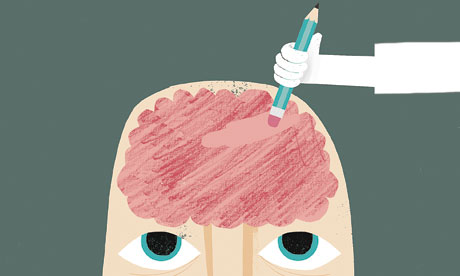 First
let us examine the case of AJ, a woman with highly superior autobiographic
memory. If you were to ask AJ what happened 20 years ago on April 11, she could
list exactly what she wore that day, along with all of her activities. Her
memory is able to retain an episodic account of nearly every day of her life.
However, this ability deeply intrudes on her life. She reports, “Most have
called it a gift but I call it a burden. I run my entire life through my head
every day and it drives me crazy” (Parker et al., 2006, p. 35). Imagine every
time you went to the grocery store, you remembered every other instance of a
trip to buy milk. It would be cognitively taxing and unnecessary to sustain all
these individual memories. And in fact, a study by Logan and Crump (2009)
demonstrated the necessity of losing detailed memory in professional typists,
who aren’t able to verbalize where keys are located or how their hands are
moving. Yet these workers are still extremely proficient in their job, and when
they are asked to explicitly focus on what their hands are doing, their
performance suffers. These typists do not have detailed memory of every time
they sat down at a keyboard, but their skill demonstrates that a composite of
all those experiences meshed together have given them their proficiency. Thus,
forgetting may allow for details of episodes to be removed so that abstraction
and generalized skill learning can occur.
First
let us examine the case of AJ, a woman with highly superior autobiographic
memory. If you were to ask AJ what happened 20 years ago on April 11, she could
list exactly what she wore that day, along with all of her activities. Her
memory is able to retain an episodic account of nearly every day of her life.
However, this ability deeply intrudes on her life. She reports, “Most have
called it a gift but I call it a burden. I run my entire life through my head
every day and it drives me crazy” (Parker et al., 2006, p. 35). Imagine every
time you went to the grocery store, you remembered every other instance of a
trip to buy milk. It would be cognitively taxing and unnecessary to sustain all
these individual memories. And in fact, a study by Logan and Crump (2009)
demonstrated the necessity of losing detailed memory in professional typists,
who aren’t able to verbalize where keys are located or how their hands are
moving. Yet these workers are still extremely proficient in their job, and when
they are asked to explicitly focus on what their hands are doing, their
performance suffers. These typists do not have detailed memory of every time
they sat down at a keyboard, but their skill demonstrates that a composite of
all those experiences meshed together have given them their proficiency. Thus,
forgetting may allow for details of episodes to be removed so that abstraction
and generalized skill learning can occur.


